Thursday, February 7, 2013

Characters (and Writers) Need Great Settings


Where am I? I’m reading contest entries once again, and a common problem is amorphous setting. Minimally, the setting needs to orient us. But a setting can also be an obstacle, increase verisimilitude, set the mood, be symbolic, and tell us about the character. This last is especially important with first-person narratives, where what is noticed and how it is described can reveal much. (The protagonist in the entry I’m reading today notices everything in purple detail. Not a winner.)
Setting can make you more productive because details spark imagination. Also, a complete setting creates helpful limits. Finally, a well-defined setting will keep you from confusing the reader (and yourself). Let’s look at each of these.
Spur your imagination. The more you see, the more you can respond to artistically. Writers tend to be in the heads of their protagonists (and in their own heads in real life), but action that can be visualized and immediate happens in offices, airplanes, bedrooms, caves of wonder, and other spaces. Seeing the setting more fully and specifically gives your characters more license to get up, move around, and act. In her class on Visual Writing (a course I highly recommend), Max Adams insists on establishing space,light, and texture. I’ve found this is a great requirement for scripts and novels. For help on creating setting, check out the articles in Novel-Writing-Help.com.
Create helpful limits. Sight lines, furniture, comfort, travel times, and proximity to resources (and weapons) all impact how a plot spins out. A definite, specific setting will create some possibilities and shut down others, helping to guide you through your story. More complete settings will also help you avoid some rewrites needed to support a plot turn (or make it clear what those rewrites should be).
Avoid confusion. The relationships of objects and people within spaces need to be consistent, especially when people need to be in certain places. I’ve read many amateur works where characters are inadvertently teleported to convenient locations. Or where distance between sites became elastic. I’ve created floor plans on graph paper so that I could refer to them. I’ve also sketched out maps. (Map making is often essential for fantasy and science fiction, and I found some help. ) Just as productive writers keep references on the details of characters (eye color, clothing, childhood trauma) to avoid inconsistencies and extended checks through manuscripts, many keep floor plans and maps at hand. I prefer creating the basics of these before drafting and doing any updates after drafting is complete. Creating and updating references during the drafting process cramps creativity and is akin to looping.
It’s okay to overdo setting in your draft. Make sure you have enough to put yourself into the scene. You can always pull back from the purple prose in the editing. And you should make an effort to reduce the description to the minimum in rewriting since readers are looking for dialogue and action. Don’t hold onto big paragraphs that readers will skip just because you fall in love with them.
For more on setting, check out Bigger 3 - Take Me to Monte Carlo.

Friday, February 1, 2013

Every Other Friday -- Stephanie Queen

I've lost control of my blog. Once again, EOF is a guest blog rather than an interview. Please welcome Stephanie Queen lives in bucolic New Hampshire where writing happy, snappy romances takes most of her time. However you can also find her watching UConn football and basketball games whenever they’re on TV, and sometimes even in person. Right now, she’s busy writing her next book in the Scotland Yard Exchange Program Series. Visit her website to learn more at StephanieQueen.com or connect with Stephanie Queen on --> Twitter or Facebook.

The Osmosis Method….I’ll let you know if it works…in about a month

Have you heard? The way to publishing success is to “forget about marketing and write that next book. Product sells!” It’s the same advice I’ve heard about six-thousand-two-hundred-and-eighty-three times. Usually tacked onto the end of a blog about marketing tips.
So, naturally I feel the pressure to Write Fast! Or at least be more productive. I’m all about efficiency. I’m a do-more-with-less believer from way back. Frank Gilbreth, Jr., the efficiency expert of Cheaper By the Dozen fame is a hero of mine (only slight exaggeration). The notion of writing a book fast—actually finishing a novel inside a month—is more seductive to me than a Jimmy Thomas novel cover.
But here’s the thing, so far all I’ve done is read about it.  The amount of research I’ve done probably qualifies me for a Ph.D. on speed writing. Here’s a few key things I’ve learned and plan to employ in my soon-to-start first fast draft attempt:
Plot Preparation is key.
As in any race against time, you can’t go in without a warm-up, toned and prepared for days, weeks, months (you get the picture). This is actually one of the common themes of numerous sources on writing fast. Candace Havens, who conducts Fast Draft workshops on-line, advocates for a period of plotting before the storm of writing. Rachel Aaron, author of 2,000 to 10,000 says in her book “the most important step of writing fast is knowing what you’re writing before you write it.”
This makes sense if you think about it. If before writing any novel you would normally have a period of pre-writing, to write a novel FAST, the pre-writing stage is more important.
Scheduling Time
I bought a timer. Not only will I schedule time, I will time my writing time. After studying my writing habits and much analysis of this self-reflection, I’ve come to the conclusion that I write faster and more effectively in short sprints. Aaron recommends such an analysis of your past writing habits to optimize your writing schedule. According to Candace Havens, you should plan on 2-3 hours a day of non-stop writing in whatever intervals or time of day that works best for you. If you don’t already track your word count, when and where you write, you might want to try it to see when you have the most output and under what circumstances. 
Osmosis
This is my way of saying “getting psyched.” For someone new to the rigor of writing with superhuman speed, it takes a change in mind-set. Or so that’s my theory. Thus all the immersion into the fast writing research, drinking the Kool-Aid of the experts and talking about it incessantly to writer friends, helps me wrap my mind around the concept to make it a real thing. I need to think of writing a novel in one month as a realistic goal, not some pie-in-the-sky dream. Reading all about other people who’ve done it—and exactly how they’ve done it—is important for me to take the task seriously and to make it a reality.
Motivation
If you want it badly enough and you invest yourself in it, and there’s no law of physics between you and your goal, then you will achieve it.  That’s a quote from Stephanie Queen on writing fast.


Sunday, January 27, 2013

Plotting for Pantsers Series 1-5

I haven't done a summary post in awhile. Traffic has picked up, and I've been reluctant to step on entries that were drawing crowds. Nonetheless, collections like the NaNoWriMo series, "Bigger" posts, Interviews and Guest Posts, Writing Prep, Rewriting, and more  have proven to popular and useful to people who are working on specific aspects of their writing productivity.

My most recent series was Plotting for Pantsers. Here's the complete list of entries. I hope you enjoy them.

Plotting for Pantsers - Can it be done?

Plotting for Pantsers 2 - Build your storytelling muscles

Plotting for Pantsers 3 - Characters to the rescue!

Plotting for Pantsers 4 - Reviving conflict

Plotting for Pantsers 5 - The confidence game


Tuesday, January 22, 2013

How to Stay Hungry

Will I make it as a writer? One by one, we asked this question of a writing guru. It was before I'd sold a word, fiction or nonfiction. I got an ambiguous answer, but the one that stuck with me was, "You've got no choice." This was addressed to a fellow student who had a disabling genetic disease. Writing was probably her one shot on any happiness in this life.

Commitment. Drive. Hunger. If you want to create a body of work, fulfill your dreams as a writer, and "make it," this cannot be a casual activity. Max Adams puts it well: "Nobody ever won an Olympic medal just showing up weekends and winging it."

If you've got no choice, you'll stay hungry. I had a teacher who suggested that if I really wanted to be a writer,  I needed to get a boring, dead-end job. A day job I was desperate to quit. He may have been right. Some of my most productive periods have been when things weren't going well at the office. But there is a risk. Mind-numbing work can numb your mind. Writing for a buck can dull your taste for the good stuff. Desperation can lead to unfortunate choices. And it is possible to die, as a writer, from neglect. Hungry does not equal starving.

The right spot for you is somewhere between contentment and desperation. With that in mind, here are five suggestions for getting and staying hungry:
  • Have reasons to write. Do you want recognition? Do you have something you need to say or a change you want to create? Do you want to hobnob with celebrities? Your reason to write is your business, but write it down. Keep it in front of you. And, while you're at it, write down the reasons why your current project must be completed. It won't do much for your writing career if you work on something new every day and never finish anything.
  • Form the habit. They say it takes 30 days. So write every day for at least that long. If it is long enough, you'll find yourself itching to put words on paper even before you realize what that feeling is. (Warning: If you stay away from writing for 30 days, you'll have a new habit. Avoiding writing.)
  • Seek out small successes. Enter a contest. Have an actor read your work. Find a market on duotrope.com Take a detour and write a flash fiction story in one sitting. You don't need to make the bestsellers list to be recognized, interpreted, or published. You don't need to finish you magnum opus before you get to write "The End."
  • Be ready. Create obstacle-free opportunities for yourself. You know how distractions can make you forget to eat even when you are hungry? That happens when you are hungry to write, too. And if you put yourself in an environment full of distractions, you'll kill your appetite for telling stories.
  • Don't satisfy your hunger. Resist the urge to tell people about your work in progress. Anything that gives you the rewards before you finish the work saps your energy as a writer.
When it comes to hunger, we are not created equal. Some people naturally need less than others. Some people are surrounded by love, friendship, and material goods. It may be easier for a rich aspiring writer to pass through the eye of a needle than to become published. But somehow, even those with every advantage manage to succeed. If they can do it, so can you. Treasure the gift of hunger.

Friday, January 18, 2013

Every Other Friday -- Katy Lee

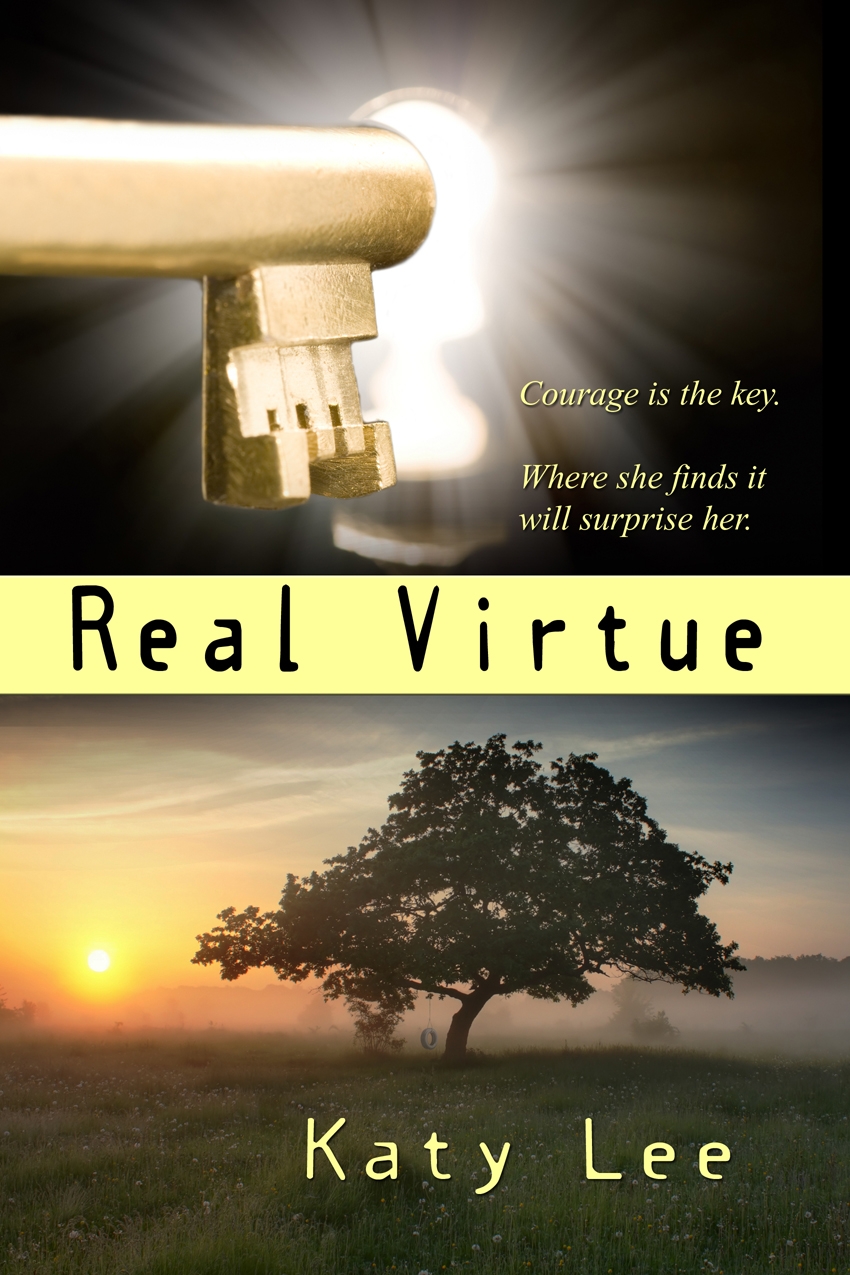
This EOF is a guest blog rather than an interview. Please welcome Katy Lee. Katy is an inspirational author, speaker, home-schooling mom, and children’s ministry director. She has dedicated her life to sharing tales of love, from the greatest love story ever told to those sweet romantic stories of falling in love. Her fresh and unique voice brings a fast-paced and modern feel to her romances. Her debut novel Real Virtue is a finalist in many writing contests, including the 2011 Georgia Maggie Award of Excellence and the 2013 EPIC Award. Her next release, Warning Signs, is a Harlequin Love Inspired Suspense and will be available in October 2013. Katy lives in New England with her husband, three children, and two cats.
 

Thank you for having me at How to Write Fast! I wish I could say I was a natural speed writer, but alas, I cannot. Actually, though, I’m okay with that because for me it’s more important to know I have a strong, healthy story concept that will hold its weight during the writing process and not get shelved halfway through. The story may not get written lightning fast, but it WILL get written.
Are you with me?

Great, because I’m about to bring up the concept of plotting. Now don’t runaway yet! Here me out. I used to be a pantser, thinking all I needed was inspiration, creative juices, and a hero/heroine that would tell me their story along the way. Well, that worked for the first book, but when I was presented with an opportunity to pitch to a big publisher, I knew I couldn’t let it pass me by—even if the story didn’t exist yet. (Shhh…don’t tell anyone).

But it was because the story wasn’t written that I knew I didn’t have all the time in the world to get the word count on the page this time around. This time, I only had eight weeks to complete it. It was time to get serious as a professional writer.
Now this doesn’t mean writing had to become so strict that I didn’t enjoy the creative process anymore. I may plot out the skeleton form of my story with all its plot turns and dark moments, and I may write the opening and closing scenes before I begin, but I’m open to surprises along the way to keep it fun, too.

E.L. Doctorow once said plotting is like “driving a car at night, when you can’t see beyond the headlights but somehow you get through the night.” When I’m plotting, I plot ahead only as far as the “headlights” shine. Typically, about three scenes in advance. All my turning points guide me along the way, but I still have flexibility for when those delightful surprises pop up. Plus, I know I’m not leading my characters off a cliff. But wait, actually, that’s not a bad idea. I could use that. (Just kidding…sort of.)

Anyway, the point is you will stay on track, and because you know what’s coming, your excitement to get your characters to those moments—so they can become larger-than-life and shine for your readers, too—pushes you like no other motivation to type through to The End.
Now plotting has not made me type faster, as in words per minute, but I don’t get “slowed up” as much as I used to. I don’t have long stretches of wasted time because of not having a clue where the story is going. Now when I start a story, I feel very confident that it will be completed in a professional amount of time.

Of course, there is a downside to all of this. It might mean more book contracts each year, and editors calling when they need a special project in a pinch. But, I’ll let you make that call for yourself.

Thank you for having me on your blog! Readers, I love comments and would love to hear from you. Please keep in touch with me at my website: www.KatyLeeBooks.com

You will see links for Twitter and Facebook and Goodreads. Let’s connect and get to know each other!


Tuesday, January 15, 2013

Don't Waste Your Time with Courses: Put them to work!


I began my day by writing a sex scene. I don't write erotica, and the scene is not part of a work in progress. It's homework for an excellent course by Max Adams. (I've taken almost all of her courses, and they have provided me with amazing value as I've sought to improve my writing.)

I'm a big believer in continuing to study writing, for writers of all levels. Obviously, the right teacher in the right course can help developing writers to master the skills needed to find success. But, just as classical musicians continue to study with coaches and instructors even after they have become renowned soloists, I see a benefit in even experienced writers seeking out teachers who can introduce them to new ideas, identify weaknesses, and prod them into doing better.

Courses and workshops can provide the impetus to become more productive (meaning raising quality as well as wordcount), but this is not always the case. In fact, I see many writers of talent and ability gliding through courses as a means to avoid writing. It can become one more of those insidious distractions that Kristan Higgins calls “writerly activities.” Doing exercises, absorbing lectures, and engaging in class discussions is real work, but it doesn't mean anything unless the lessons are applied to manuscripts intended for publication. With that in mind, I'd like to suggest a few rules for those who want to keep their coursework in balance.

  1. Spend as much time on your work in progress as you do on your class activities. For intense courses, this may be difficult to accomplish for any given 24 hour period. It is best to make an estimate of the length of time–3 days, 5 days, a week, a month—within which you want the times to equal out before the class begins. Then, you need to track the time the time you spend working in the class and keep your commitment to yourself.
  2. On any given day, apply a lesson from the class to your work in progress. This doesn't have to be a lesson from the same day. In fact, it is generally difficult to apply to many lessons over a short period of time, and that can lead to a disorganized and fractured approach to composition. But keeping a focus on the true purpose of the course through direct activity will help you to get more value from the instruction and will help you avoid consuming more courses than you can use.
  3. Get out of your comfort zone. It's good to select the course that is not directly related to your effort and that you have doubts about from time to time. Certainly, if you want to master plotting, it's good to take a course that deepens your knowledge and sharpens your skills in that area. However, if you are repeatedly taking courses on one subject, it's good to ask yourself why. It may be better to head into an area with the possibility of fresh ideas, mistakes, and failure.
  4. Keep a list of key ideas from a course and make sure you try them out in your work sometime in the future. I suggest actually creating a handwritten (with full sentences), and checking off each item once you feel that you have achieved mastery in the works you're writing for publication. You may even want to put the items on the list onto specific calendar dates to remind you to put them into effect. Too often, only a few ideas from a course work their way into practice and many that might have real value are forgotten within days of the completion of the course.
  5. Take a vacation from courses if they are getting in the way of your writing. Courses can be as big a distraction as video games or television or social media. Now, none of these are bad in and of themselves. In moderation all of them can enhance your work. But they can also claim too much of your time. And courses, in particular, can provide and unwarranted righteous feeling that an hour wasted watching American Pickers can't. That's what makes them dangerous.

Obviously, I don't want to discourage people from getting the real value that courses offer. (I expect to take several courses this year, and I'll be teaching fifteen courses and workshops myself.) But, the writing must always come first. Remind yourself that you are primarily a producer of art (or entertainment or content or whatever you choose to call it), not a consumer. And allocate your time and attention appropriately.

Wednesday, January 9, 2013

Plotting for Pantsers 5 - The confidence game

One of the most powerful scenes on broadcast television was dictated on the set of NYPD Blue by David Milch. Dennis Franz as Detective Andy Sipowicz brought the scene, a rant against God, to life on camera just minutes after it had been created. (I just read about this in The Revolution Was Televised, a book I recommend.) Pantsers, you are not alone. And some wonderful writing comes from a spontaneous flow of words.

And yet, as I indicated last time, pantsers often feel less confident than their (equally wonderful) plotting colleagues who, in theory, always know what they will be writing about. Pantsers write themselves into corners. They doubt the value of a scene, a chapter, or even a whole book. They run out of gas. They wonder if the last book they wrote is really the last book they ever will write.

There are traps that pantsers need to avoid. Looping, skimping on preparation and research, jumping to new projects when the going gets tough, and dodging emotional engagement can sap confidence and trigger paralysis. But you can also take steps to build and maintain your confidence.

Write one true sentence. This is especially useful when you seem to have painted yourself into a corner. Writing the whole scene or finding the plot point that will allow threads to come together may be impossible. Don't ask too much of yourself. Ask for one true sentence. It can be the next one in the story or it can be a question about what you need most to continue. (Yes, questions are sentences. And, chances are, your subconscious will answer the question later, in the garden or the shower or on the treadmill.)

Rediscover the fire. I hope you have adopted the practice, before you even begin a new work, of writing down ten reasons (in full sentences) why you love this idea and must write about it. If those sentences are good, they can revive your interest and reassure you that this project must be completed. If you don't have the sentences, either try to construct them now or go back to the best scene you have written (preferably in the work in progress, but it can be in another work you wrote) and reread it.

Know what drives you. Why do you need to write? Do you have a message? A person you want to communicate with? An image you have to get out of your head? A part of your life you need to understand? Find your best reason and remind yourself of if.

Understand what you do well. I'm a great one for lists, so I have written down what I have to offer as a writer. We tend to concentrate on our weaknesses, worrying about them and trying to overcome them. That is not a confidence builder. What do you do best? If you know what that is, use that gift to write another piece of your work in progress.

Create small successes. This may be the best. Success begets success. Find something small you know you can do, and do it. Then do the next thing. Don't be scared. Just scale back your ambition for a few days and get on with it.

Read something by your favorite author. The short stories of Harlan Ellison, Edgar Alan Poe, and James Joyce are the reasons why I became a writer. They thrill me by demonstrating what is possible. When I go back to them, I find the old impulse to put words on paper is revived and refreshed. Who inspires you?

All of these are positive steps you can take. And if you have a lucky hat or an affirmation that works for you, go for it. Oh, one thing to avoid - don't look for empathy from a plotter. Too many see the path they take as the only true path. Don't be bullied into following them. Instead, come to love your own twisty, turny, absurd and dangerous path.